Brachycephalic Dogs Banned From Cargo: What It Means for Your Move to Dubai, London or the USA
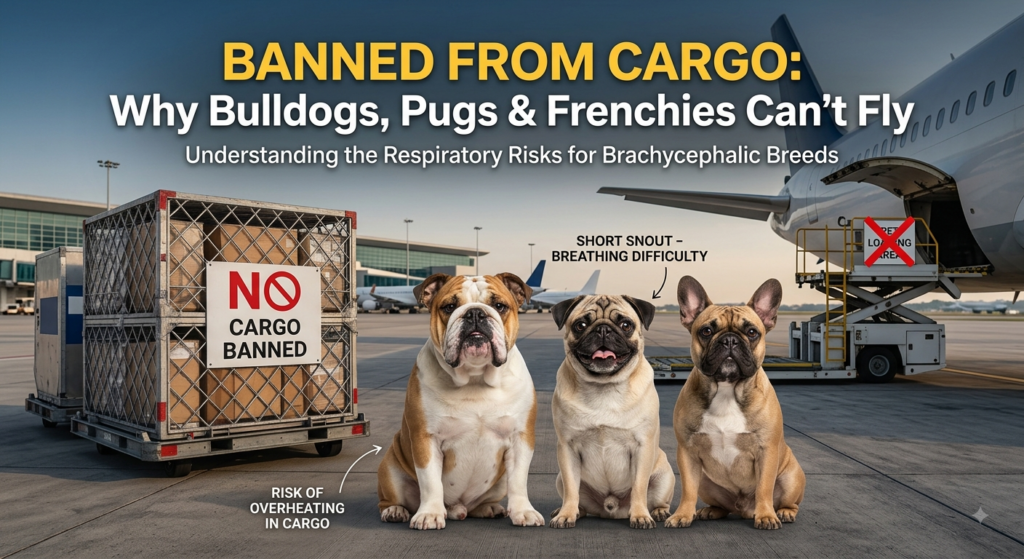
Brachycephalic dogs banned from cargo can still travel internationally, but their relocation requires a different travel plan. Bulldogs, Pugs, French Bulldogs and other short-nosed breeds are commonly restricted from travelling in airline cargo because of the respiratory risks associated with their anatomy.
If you are moving your dog to Dubai, London or the USA, a cargo restriction does not necessarily mean your pet cannot fly.
Depending on your dog’s size, health, airline, route and destination requirements, alternatives may include in-cabin travel, a professional flight nanny, climate-controlled ground transportation or private charter travel.
In this guide, we explain why airlines restrict brachycephalic breeds, what the cargo ban actually means, and how you can plan an international pet relocation without relying on conventional cargo travel.
Quick answer: Brachycephalic dogs are often restricted or prohibited from airline cargo because their shortened airways can make them more vulnerable to breathing difficulties, particularly under stressful or hot conditions. However, cargo restrictions do not automatically prevent international travel. Alternative options may include cabin travel, pet escorts, ground transportation and private charter flights.
What Does “Brachycephalic Dogs Banned From Cargo” Mean?
When people search for brachycephalic dogs banned from cargo, they are usually referring to airline policies that prevent certain short-nosed breeds from travelling in the aircraft cargo hold.
The important distinction is:
Banned from cargo does not mean banned from flying.
The restriction generally concerns the cargo hold, while some airlines may still permit eligible small pets to travel in the passenger cabin.
However, every airline has its own rules. Restrictions can also depend on:
- Breed
- Dog size
- Weight
- Carrier dimensions
- Aircraft type
- Route
- Destination
- Temperature
- Season
- Transit airport
- Health requirements
Because airline policies change, always confirm the current rules with the airline before booking.
For broader international pet-travel planning, see our Complete Guide to International Pet Travel in 2026.
Why Are Brachycephalic Dogs Banned From Cargo?
The primary concern is their brachycephalic airway structure.
Brachycephalic dogs have a shortened skull and flattened facial structure. Depending on the breed and individual dog, this can be associated with:
- Narrow nostrils
- A shortened upper airway
- An elongated or thick soft palate
- Restricted airflow
- Difficulty regulating body temperature
- Increased sensitivity to heat and stress
This is also associated with Brachycephalic Obstructive Airway Syndrome (BOAS) in affected dogs.
During air travel, stress and heat can potentially make breathing more difficult. Because cargo travel involves separation from the owner and additional handling, many airlines have introduced restrictions for short-nosed breeds.
This is why brachycephalic dogs banned from cargo are often required to use an alternative transportation method.
Which Dog Breeds Are Commonly Banned From Cargo?
There is no single worldwide list because each airline establishes its own pet policy.
However, breeds that are commonly restricted include:
| Breed | Common Cargo Status |
|---|---|
| French Bulldog | Frequently restricted |
| English Bulldog | Frequently restricted |
| American Bulldog | May be restricted |
| Pug | Frequently restricted |
| Boston Terrier | Frequently restricted |
| Boxer | May be restricted |
| Shih Tzu | May be restricted |
| Pekingese | Frequently restricted |
Some airlines also restrict flat-faced cat breeds, including:
- Persian cats
- Himalayan cats
- Exotic Shorthair cats
Important: Do not treat a breed list as universal. Always verify the exact airline, aircraft and route before making a booking.
Do Brachycephalic Dogs Banned From Cargo Have Other Travel Options?
Yes.
If your Bulldog, Pug or French Bulldog cannot travel in cargo, you may have several alternatives.
1. In-Cabin Pet Travel
For smaller dogs, travelling in the passenger cabin can be an alternative to cargo.
Your dog normally needs to remain inside an airline-approved carrier throughout the flight.
Airlines may impose restrictions on:
- Combined pet and carrier weight
- Carrier dimensions
- Number of pets permitted
- Breed
- Route
- Aircraft
- Cabin availability
Some airlines use limits around 8–9 kg (18–20 lb) for the pet and carrier combined, but this is not a universal standard.
Always check the airline’s current requirements.
2. Flight Nanny or Pet Escort
A flight nanny is a professional who accompanies your pet during air travel.
Depending on the airline and route, the pet may travel in the passenger cabin with the escort instead of entering the cargo hold.
A professional pet escort may help with:
- Airport check-in
- Airline coordination
- In-cabin supervision
- Connecting flights
- Ground transfers
- Arrival procedures
- Pet documentation
This can be useful when an owner cannot personally accompany their pet.
3. Climate-Controlled Ground Transportation
Ground transportation can be useful for airport transfers, regional routes or as part of a larger international relocation.
A professional pet transport vehicle can provide:
- Temperature-controlled transportation
- Direct supervision
- Scheduled rest stops
- Door-to-door transfers
- Reduced handling
- Dedicated pet transportation
For international relocations, ground transportation can also be combined with air travel.
4. Private Charter Travel
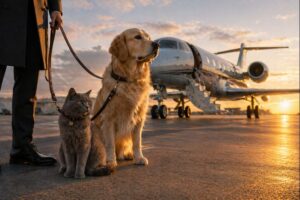
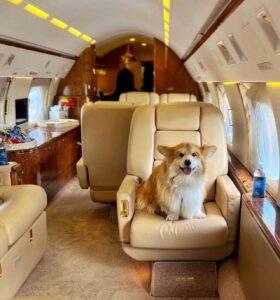
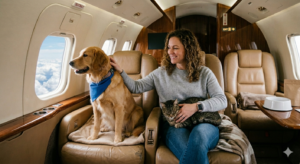
Private charter travel is another option for families relocating with larger dogs or multiple pets.
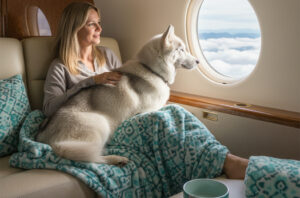
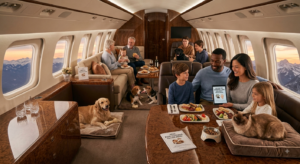
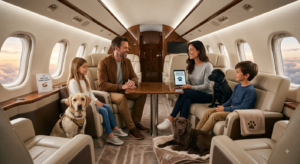
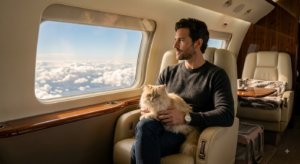
Unlike conventional commercial cargo transportation, private aviation can allow pets to remain in the passenger cabin with their owners or handlers, subject to the aircraft operator and destination requirements.
This can be particularly useful for larger Bulldogs, French Bulldogs and other breeds that cannot meet commercial cabin requirements.
For more information, read our guide to pet-friendly private jet travel.
How to Relocate Brachycephalic Dogs Banned From Cargo to Dubai
Dubai requires careful planning for international pet relocation, particularly when travelling with a short-nosed breed.
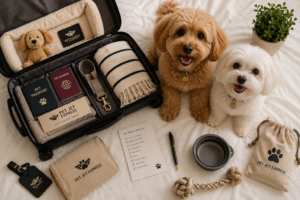
Before travelling, pet owners may need to arrange:
- Microchipping
- Vaccinations
- Health documentation
- Import or export permits where applicable
- Veterinary certificates
- Airline approval
- Customs procedures
The climate is another important consideration.
Hot weather can increase the challenges associated with transporting brachycephalic dogs. This means you should consider the entire journey, not just the time spent onboard the aircraft.
Think about:
Home → Airport → Check-in → Security/handling → Flight → Arrival → Customs → Ground transfer → Final destination
Every stage should be planned to reduce unnecessary heat, stress and waiting time.
For Dubai-specific planning, you can also read our guide on pet-friendly private jet charters in Dubai.
How to Relocate Brachycephalic Dogs Banned From Cargo to London
Moving a Bulldog, Pug or French Bulldog to London requires planning for both airline restrictions and UK pet-entry requirements.
Depending on your origin country and circumstances, requirements may involve:
- Microchip
- Rabies vaccination
- Health certificate
- Destination-specific documentation
- Airline approval
- Approved routes and entry points
- Tapeworm treatment for dogs where required
UK pet travel requirements can change, so check the latest official guidance before travelling.
For a more detailed checklist, see our 2026 UK and EU Pet Relocation Documentation Guide.
You should also review the official UK Government pet travel guidance.
How to Relocate Brachycephalic Dogs Banned From Cargo to the USA
The USA has its own requirements for dogs entering the country, and these requirements can depend on where the dog has travelled recently.
For international travel, owners should check the current requirements before making arrangements.
The USDA APHIS Pet Travel guidance explains that international pet travel requirements can include documentation, vaccinations, health certificates and destination-specific requirements.
For dogs entering the United States, the CDC’s dog import requirements should also be reviewed.
If your dog cannot travel through conventional cargo, possible alternatives include:
- In-cabin travel
- Flight nanny services
- Professional pet relocation
- Climate-controlled ground transportation
- Private charter travel
What Should You Check Before Booking a Flight?
If you have brachycephalic dogs banned from cargo, don’t book the first available flight.
Use this checklist instead.
1. Confirm the Airline’s Breed Policy
Ask the airline whether your exact breed is accepted on the specific route and aircraft.
2. Check Cabin Eligibility
If you are considering cabin travel, confirm:
- Pet weight limit
- Carrier dimensions
- Breed restrictions
- Route restrictions
- Number of pets permitted
- Cabin availability
3. Check Temperature Restrictions
Some airlines impose additional pet restrictions during periods of extreme temperatures.
This can be particularly important when travelling through or to hot destinations such as Dubai.
4. Check Destination Requirements
Review the latest:
- Microchip requirements
- Rabies requirements
- Health certificates
- Import permits
- Veterinary documents
- Customs procedures
5. Speak With Your Veterinarian
Before international travel, discuss your dog’s ability to travel with your veterinarian.
This is particularly important for dogs with known respiratory problems or signs associated with BOAS.
6. Plan Your Ground Transportation
Don’t overlook the journey between your home, airport and final destination.
For brachycephalic breeds, a temperature-controlled vehicle and experienced handler may be useful for reducing unnecessary exposure to heat and stress.
Cargo vs Cabin vs Flight Nanny vs Private Charter
| Travel Method | Best For | Main Advantage | Main Limitation |
| In-cabin | Smaller dogs | Pet stays with owner | Strict size and weight limits |
| Flight nanny | Dogs requiring cabin supervision | Professional escort | Availability and cost |
| Ground transport | Regional journeys and transfers | Direct supervision | Cannot replace air travel for every route |
| Private charter | Larger dogs, multiple pets and complex relocations | Pets can remain in cabin | Higher cost |
What Is the Safest Way to Travel With a Brachycephalic Dog?
There is no single travel method that is safest for every dog.
The appropriate option depends on:
- Your dog’s health
- Breed
- Size
- Age
- Route
- Season
- Airline
- Aircraft
- Destination requirements
- Veterinary assessment
For this reason, owners should combine veterinary advice, airline confirmation and destination-specific regulatory guidance when planning an international move.
Frequently Asked Questions About Brachycephalic Dogs Banned From Cargo
Why are Bulldogs banned from cargo?
Bulldogs have a brachycephalic airway structure that can make breathing more difficult. Heat, stress and other factors associated with air travel may increase respiratory risks. Consequently, many airlines restrict or prohibit Bulldogs from travelling in the cargo hold.
Can Pugs fly in the cargo hold?
Many airlines restrict Pugs from cargo travel, but there is no universal airline policy. Some smaller Pugs may qualify for cabin travel if the airline permits the breed and the dog meets its carrier and weight requirements.
Can French Bulldogs fly internationally?
Yes. French Bulldogs can travel internationally, but the available travel method depends on the airline, route, destination requirements, dog size and health. Cargo may not be available, so owners may need to consider cabin travel, an escorted flight or private charter.
Can a French Bulldog fly in the cabin?
In some cases, yes. A French Bulldog may travel in the cabin if the airline permits the breed and the dog meets its carrier and weight requirements.
However, many adult French Bulldogs may be too large for standard commercial cabin limits, so confirm the exact airline policy before booking.
What dog breeds are banned from cargo?
There is no universal worldwide cargo-ban list. Commonly restricted breeds include French Bulldogs, English Bulldogs, Pugs, Boston Terriers, Boxers, Shih Tzus and Pekingese.
Individual airline policies can differ significantly.
How do I relocate a French Bulldog to Dubai?
First, check the UAE’s current pet import requirements and the airline’s breed policy. If cargo is unavailable, consider in-cabin travel, a professional pet escort, climate-controlled ground transportation or private charter travel.
Your veterinarian should also assess your French Bulldog before international travel.
What is a flight nanny for pets?
A flight nanny is a professional pet escort who accompanies an animal during air travel. When airline rules allow it, the pet can remain with the handler in the passenger cabin instead of travelling in cargo.
Is private charter better for brachycephalic dogs?
Private charter can provide a cabin-based alternative to commercial cargo and may be useful for larger dogs or complex international relocations.
However, private charter does not eliminate the need to consider your dog’s health, destination regulations, aircraft conditions and veterinary advice.
Can brachycephalic dogs banned from cargo still travel to Dubai, London or the USA?
Yes, in many cases. A cargo restriction does not automatically prevent a dog from travelling internationally.
The available options depend on the specific airline, route, destination regulations, dog size and health. Cabin travel, flight nanny services, ground transportation and private charter may all be considered depending on the circumstances.
Moving Brachycephalic Dogs Banned From Cargo? We Can Help
A cargo restriction doesn’t have to mean cancelling your international move.
If you’re relocating a Bulldog, Pug, French Bulldog or another brachycephalic pet between Dubai, London, the USA or another international destination, the journey needs to be planned around your pet’s specific requirements.
PetJet Express can help coordinate international pet relocation, flight nanny services, private jet pet travel, ground transportation and documentation support based on your route.
For additional guidance, explore our international pet relocation guide or our UK and EU pet documentation guide.
Planning to move a Bulldog, Pug or French Bulldog internationally? Contact PetJet Express for a route-specific pet relocation plan.