Senior Pet Air Travel: 10 Essential Tips for Safe, Stress-Free Flying
Planning a trip or international relocation with an older dog or cat requires extra care, thoughtful preparation, and a travel plan that puts their wellbeing first. As pets age, they may develop joint stiffness, reduced vision or hearing, chronic health conditions, and increased sensitivity to unfamiliar environments. These changes do not automatically mean that flying is impossible, but they make preparation particularly important.
Senior pet air travel should always begin with an assessment of your pet’s individual needs. From veterinary clearance and choosing the right flight to managing medication and creating a comfortable arrival experience, every detail can help reduce avoidable stress. Whether you are moving from Dubai to London, relocating to the United States, or travelling internationally with a much-loved companion, understanding the requirements can make the process easier to manage.
At Pet Jet Express, we believe that pets are family at every stage of life. This guide explains ten practical considerations for planning air travel with aging dogs and cats, helping you make informed decisions alongside your veterinarian and pet relocation specialist.
Table of Contents
- Schedule a veterinary health assessment
- Choose the right travel arrangement
- Prepare your pet for the journey
- Manage arthritis and mobility challenges
- Plan food, water, and medication
- Reduce travel anxiety
- Prepare international travel documents
- Protect your pet from temperature extremes
- Plan a comfortable arrival
- Create a personalised travel checklist
- Frequently asked questions
1. Schedule a Veterinary Health Assessment Before Senior Pet Air Travel {#veterinary-assessment}
The most important step in senior pet air travel is arranging a veterinary examination before confirming your travel plans. A pet’s age alone does not determine whether flying is appropriate. Their overall health, existing medical conditions, mobility, temperament, and the length and nature of the journey all matter.
Your veterinarian can assess heart and respiratory function, joint health, hydration, and any conditions that may require additional monitoring during travel. Be particularly careful if your dog or cat has arthritis, kidney disease, diabetes, heart disease, breathing difficulties, or age-related cognitive changes.
Ask your veterinarian whether your pet is fit for the specific itinerary you are considering, including airport transfers, waiting periods, connections, and the destination climate. You should also discuss how to manage prescribed medication and what warning signs to monitor throughout the journey.
A general health certificate does not necessarily establish that every travel arrangement is suitable for your pet. Depending on the destination, separate examinations, certificates, vaccinations, blood tests, or official approvals may be required. Start the veterinary process early so that you have time to address any concerns before departure.
2. Choose the Right Travel Arrangement for an Aging Pet {#travel-arrangement}
When flying with an older dog or cat, evaluate the complete journey rather than focusing only on the time spent in the air. Long queues, several flight connections, repeated transfers, unfamiliar surroundings, and extended waiting periods may be tiring for animals with reduced stamina or mobility.
Where possible, look for an itinerary with fewer connections, manageable transfer times, suitable departure hours, and a clear plan for hydration, toileting, and rest. Confirm how your pet will be handled at each stage, who will supervise them, and whether assistance is available when they need to move between vehicles and aircraft.
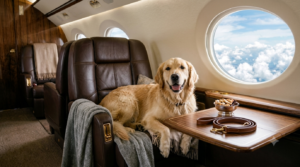
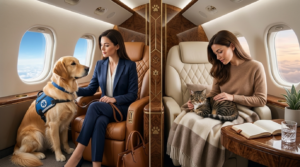
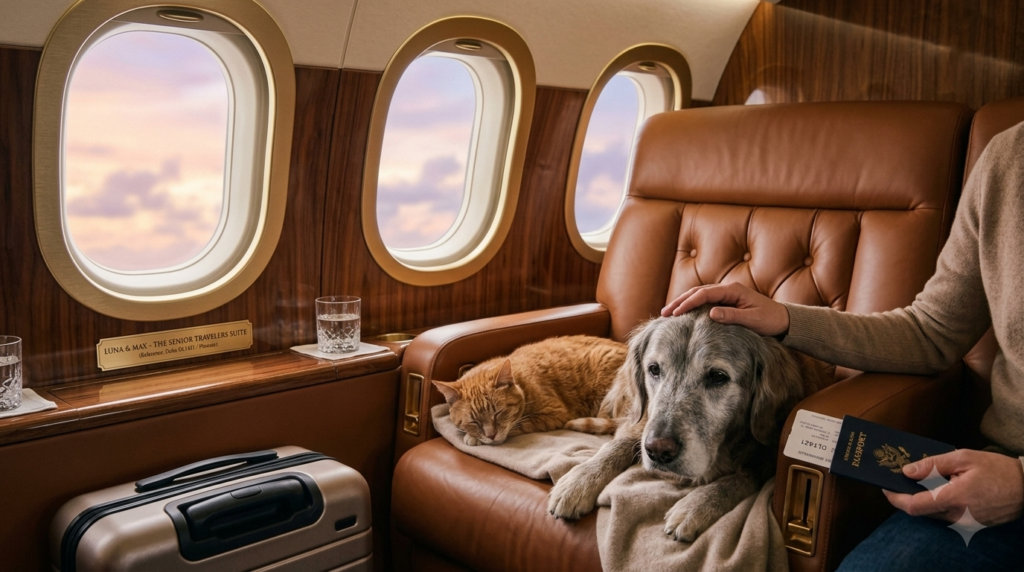
Private aviation may offer greater scheduling flexibility and, on eligible arrangements, allow pets to remain beside their owners in the cabin. This can be an option worth exploring for families seeking a more personalised relocation experience. However, cabin access, aircraft suitability, route availability, and destination regulations must be confirmed in advance. Private travel is not automatically safer for every senior animal, particularly one with a medical condition that requires specialised care.
Pet Jet Express helps families explore pet-focused private jet relocation options, coordinate journey requirements, and understand the practical considerations involved in keeping pets and their owners together.
3. Prepare Your Senior Dog or Cat for the Travel Carrier {#carrier-preparation}
An unfamiliar carrier can make an already demanding journey more stressful. Begin preparing your pet several weeks before departure, provided their health and mobility allow it. Introduce the carrier gradually in a familiar room, add comfortable bedding, and allow your pet to explore without being forced inside.
For older cats, leaving the carrier open and accessible can help them become accustomed to its presence. For senior dogs, practise short periods in the travel space and reward calm behaviour with praise or suitable treats. Gradual exposure can help make the carrier feel more familiar by travel day.
Choose equipment that allows your pet to stand, turn around, and lie down comfortably while meeting the airline or aircraft operator’s requirements. Pay attention to easy entry, good ventilation, supportive bedding, and a non-slip surface. Pets with arthritis or reduced mobility may find high entrances and slippery flooring especially difficult.
Even when travelling by private jet, confirm whether an approved carrier or restraint is required during particular stages of the journey. Preparing the correct equipment in advance can prevent last-minute problems and help your pet travel more comfortably.
4. Manage Arthritis and Mobility Challenges During Air Travel {#mobility}
Arthritis and joint stiffness are common concerns in older dogs and cats. Remaining in one position for extended periods, navigating slippery floors, or being lifted awkwardly can increase discomfort. A mobility plan developed with your veterinarian can help you anticipate these challenges before leaving home.
For dogs, plan appropriate toilet breaks and gentle movement before departure and during permitted stops. Avoid making them walk long distances through crowded terminals or climb stairs unnecessarily. For cats, prioritise secure handling, a familiar carrier, and a quiet environment that minimises unnecessary transfers.
Supportive bedding, ramps where appropriate, and assistance from trained handlers may make certain movements easier. Always handle your pet according to your veterinarian’s recommendations, particularly if they have spinal problems, severe arthritis, or recent surgery.
Do not increase pain medication, change prescribed doses, or introduce new medication solely to make travelling easier without veterinary guidance. If your pet’s mobility has deteriorated recently, reassess the travel plan before proceeding rather than assuming they will manage as usual.
5. Plan Food, Water, and Medication Carefully {#food-water-medication}
Feeding and medication schedules can become especially important when travelling with senior pets. Some older animals have dietary restrictions or medical conditions that require food and medication at specific times. A long journey that disrupts their usual routine may therefore require careful coordination.
Ask your veterinarian how to schedule meals, water, and medication around departure and arrival. Avoid assuming that every pet should fast for the same length of time before flying. The appropriate approach depends on the animal’s health, travel arrangements, and medical needs.
Prepare a dedicated travel kit containing prescribed medication in its original packaging, written dosing instructions, relevant medical records, your veterinarian’s contact details, familiar food, approved treats, a water bowl, absorbent pads, and cleaning supplies. Keep essential items accessible throughout the journey rather than packing them where they cannot be reached easily.
If your pet has diabetes, kidney disease, or another condition requiring carefully timed treatment, coordinate the travel schedule with your veterinarian in advance. Make sure the person accompanying your pet understands the medication plan and knows whom to contact if a dose is missed or a problem arises.
6. Reduce Anxiety When Flying with Older Dogs and Cats {#travel-anxiety}
Older pets may become more sensitive to unfamiliar sounds, people, smells, and changes in routine. Reduced hearing or vision can also make a new environment harder to navigate. A calm and predictable travel experience can help limit unnecessary distress.
Bring familiar bedding or a favourite toy if permitted, maintain a reassuring tone, and avoid excessive handling. Give your pet time to become comfortable with the carrier and any travel equipment before departure. If your dog or cat has a history of severe anxiety, discuss management options with your veterinarian well ahead of time.
Never give sedatives or tranquillising medication without veterinary direction. These medications can affect balance, breathing, blood pressure, and temperature regulation, and may pose additional concerns for animals with age-related health conditions. A veterinarian can help assess the risks and recommend an appropriate approach for the individual animal.
For more information about responsible pet travel, consult the American Veterinary Medical Association’s pet travel guidance. Always discuss individual medical concerns with your own veterinarian.
7. Prepare International Pet Travel Documents in Advance {#travel-documents}
International relocation with an older pet involves more than a health assessment. Each destination country has its own import requirements, and airlines or private aircraft operators may have additional conditions for accepting animals.
Depending on the route, your pet may need a compliant microchip, vaccination records, rabies documentation, blood tests, parasite treatments, an official veterinary health certificate, import permits, or advance approvals. Some procedures must be completed within specific time windows, so the order and timing of appointments matter.
Check the current requirements for both the departure and destination countries before confirming your itinerary. If your journey includes a transit country, verify whether additional conditions apply there. Keep digital and printed copies of essential records and ensure that names, identification numbers, vaccination details, and certificate dates are consistent.
Official resources can help you verify the requirements:
These requirements can change, so confirm the rules that apply to your specific route and travel date. A professional pet relocation team can also help coordinate documentation, veterinary appointments, and travel logistics.
8. Protect Senior Pets from Temperature Extremes {#temperature}
Older dogs and cats may have reduced tolerance for heat or cold, especially when they have respiratory, cardiac, or other chronic health conditions. Consider the weather at departure, during transit, and at the destination when selecting your itinerary.
Arrange suitable ground transportation and avoid leaving your pet in a parked vehicle or exposing them to extreme temperatures while waiting for a transfer. Confirm how the travel environment will be ventilated and temperature-controlled, and ask your travel provider what arrangements are available if delays occur.
The ideal departure time depends on the route, local climate, and your pet’s individual needs. An early or late flight may help avoid some outdoor heat in certain locations, but it is not automatically the best option for every animal. Your veterinarian can help you assess the relevant risks.
Watch for unusual panting, weakness, disorientation, difficulty breathing, or other signs of distress. If your pet shows concerning symptoms, seek veterinary assistance promptly. Severe breathing difficulty, collapse, or suspected heatstroke requires emergency attention.
9. Plan a Comfortable Arrival and Recovery Period {#arrival}
A senior pet’s needs do not end when the aircraft lands. After a long journey, your dog or cat may need extra time to rest, drink, eat, and adjust to a new environment. Prepare a quiet, accessible area before arrival so that your pet can settle without unnecessary stimulation.
For older dogs, provide easy access to water and a familiar resting place, and avoid demanding exercise immediately after travel. Allow gentle movement according to their normal ability and veterinary advice. For cats, set up a secure room with familiar bedding, food, water, and a conveniently placed litter tray.
Keep your pet’s routine as consistent as possible during the first few days. Monitor appetite, drinking, urination, movement, and behaviour. Mild tiredness may occur after a demanding journey, but symptoms that are severe, persistent, or worsening should not be dismissed as normal ageing or travel fatigue.
Contact a veterinarian if your pet develops concerning symptoms. Difficulty breathing, collapse, or other severe signs warrant urgent veterinary attention.
10. Create a Personalised Senior Pet Travel Checklist {#travel-checklist}
Every aging pet has different requirements. A healthy older cat may be able to manage a journey that would be unsuitable for a dog with severe arthritis or a pet with an unstable heart condition. Your travel arrangements should reflect your companion’s actual health and mobility rather than age alone.
Before departure, work through this checklist:
- My veterinarian has assessed my pet’s fitness for the proposed journey.
- I have discussed existing conditions and medication requirements.
- The itinerary minimises unnecessary transfers and prolonged waiting.
- The carrier or travel space suits my pet’s size and mobility.
- Food, water, medication, and toileting arrangements are planned.
- All required travel documents and destination approvals are in order.
- Ground transportation and temperature management are confirmed.
- I have packed medical records and essential supplies.
- A quiet and accessible recovery area is ready at the destination.
- I know whom to contact if my pet becomes unwell during travel.
Completing these steps early can help you identify potential difficulties while there is still time to adjust the schedule, seek additional veterinary advice, or consider a different travel arrangement.
Frequently Asked Questions About Senior Pet Air Travel {#faqs}
Can senior dogs and cats fly safely?
Many senior pets can fly when they are medically suitable for the specific journey. Age alone does not determine whether air travel is appropriate. A veterinary assessment is particularly important for animals with chronic illness, mobility problems, or heart and respiratory conditions.
What is the best way to fly with an older dog?
The most suitable arrangement depends on the dog’s medical condition, size, breed, temperament, and destination. Prioritise veterinary clearance, a suitable travel environment, minimal unnecessary transfers, comfortable bedding, and access to medication and assistance. Discuss the options with your veterinarian before booking.
Can an elderly cat travel internationally?
An elderly cat may be able to travel internationally if its health and the destination’s import rules permit it. Plan for secure transport, familiar bedding, temperature management, medication requirements, and a quiet transition after arrival. Cats with significant health concerns should receive individual veterinary advice before travel.
Should I sedate my senior pet before flying?
Do not sedate your pet unless your veterinarian specifically recommends and supervises the treatment. Sedatives can affect breathing, balance, blood pressure, and temperature regulation. Your veterinarian can help you explore appropriate options for managing anxiety during the journey.
How early should I plan an international move with my senior pet?
Start planning several weeks or months in advance whenever possible. Depending on the destination, your pet may need vaccinations, blood tests, permits, or veterinary certificates with specific timelines. Early planning also gives you time to assess medical suitability and arrange an appropriate travel environment.
Is private jet travel suitable for senior pets?
Private aviation may provide greater itinerary flexibility and allow eligible pets to remain beside their owners in the cabin. However, it is not automatically the safest choice for every senior animal. Medical suitability, journey duration, aircraft arrangements, veterinary advice, and destination regulations should guide the decision.
Plan Your Senior Pet’s Journey with Pet Jet Express
Moving internationally with an aging companion can feel complicated, but careful preparation makes it easier to understand the decisions involved. By arranging a veterinary assessment, planning medication and mobility needs, confirming destination requirements, and choosing a suitable travel arrangement, you can put your pet’s wellbeing at the centre of the process.
Pet Jet Express specialises in pet-focused private jet relocation and helps families explore travel arrangements designed to keep eligible pets beside their owners. Our team can help coordinate route planning, documentation, and practical journey requirements, subject to aircraft availability, veterinary fitness, and destination regulations.
Planning an international move with your senior dog or cat? Visit Pet Jet Express to explore your relocation options and discuss a journey tailored to your family.
Family Flies Together.