Introduction
Moving to a new country is a major change for your entire family, including your dog. After an international flight, your pet may need time to adjust to unfamiliar surroundings, different weather, new walking routes, and a completely different daily routine.
Good post-relocation pet care is about more than helping your dog settle into a new home. It also means monitoring their health after travel, rebuilding familiar routines, and making gradual adjustments to their new environment.
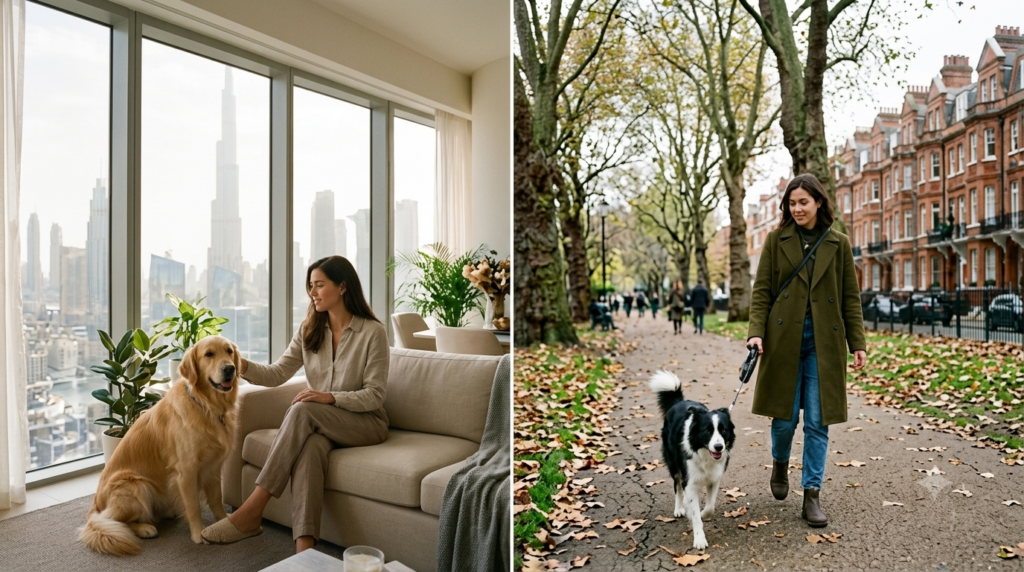
For families relocating to Dubai or London, the transition can look quite different. Dubai’s hot climate requires careful planning around outdoor activity, hydration, and heat exposure. London brings cooler, wetter weather, changing daylight hours, and different outdoor environments.
At Pet Jet Express, we understand that a pet’s journey does not end when the flight lands. Helping your dog feel safe and comfortable in their new home is an important part of the relocation experience.
Table of Contents
- Give your dog time to decompress after relocation
- Set up a familiar and comfortable home
- Post-relocation pet care in Dubai
- Helping your dog adjust to life in London
- Rebuild your dog’s daily routine
- Find a local veterinarian
- Watch for signs of stress after moving
- Build confidence in the new neighbourhood
- Your post-relocation pet care checklist
- Frequently asked questions
Give Your Dog Time to Decompress After Relocation
International travel can be tiring, and a new home introduces unfamiliar sights, sounds, smells, and people. Some dogs settle quickly, while others need more time to feel secure.
Keep the first few days quiet
Avoid filling the first days with visitors, long outings, or too many new experiences. Give your dog an opportunity to explore the home at their own pace.
Set up a quiet place where your dog can rest without being disturbed. Make sure they have easy access to fresh water, their usual food, and a comfortable sleeping area.
Keep familiar belongings nearby
Bring familiar items from home, such as:
- Their usual bed or blanket.
- Favourite toys.
- Familiar food and treats.
- Their regular lead, harness, and feeding bowls.
Familiar smells and routines can help make the new environment feel less overwhelming.
Monitor their appetite and energy
Your dog may be quieter than usual after travelling. Monitor their drinking, eating, toileting, and general behaviour.
Contact a veterinarian if your dog shows persistent appetite loss, repeated vomiting, diarrhoea, unusual lethargy, breathing difficulties, or other concerning symptoms. Do not assume every symptom is simply travel stress.
Set Up a Familiar and Comfortable Home
A consistent home environment can make a big difference during the first weeks after relocation.
Create a dedicated resting space
Choose a quiet area away from constant foot traffic. Keep your dog’s bed, water, and familiar belongings in predictable places.
If you are moving into an apartment, check that balconies, windows, and doors are secure. Dogs that are unsettled or unfamiliar with their surroundings may be more likely to bolt through an open door.
Introduce the home gradually
Let your dog explore one room at a time if they appear overwhelmed. Reward calm behaviour and avoid forcing interactions with new people or pets.
If your new home has a garden or terrace, check fencing, gates, plants, and any gaps where your dog could escape.
Check your building’s pet policies
Before settling in, confirm the building’s rules about pets, lifts, shared spaces, waste disposal, and outdoor areas. In rented accommodation, make sure your tenancy permits dogs.
A little preparation can prevent avoidable stress once your dog begins exploring the new neighbourhood.
Post-Relocation Pet Care in Dubai
Moving to Dubai can require a significant adjustment, particularly for dogs arriving from cooler climates. Heat management should be one of your first priorities.
1. Adapt walks to the heat
Avoid strenuous outdoor activity during the hottest parts of the day. Schedule walks for cooler periods, such as early morning or later in the evening, depending on actual weather conditions.
Pavements and other hard surfaces can become extremely hot, so check the ground before walking your dog. If the surface is too hot for your hand, choose another route or wait until conditions improve.
2. Prioritise shade, water, and indoor cooling
Make sure your dog has constant access to fresh drinking water and a cool, well-ventilated indoor space.
Never leave your dog unattended in a parked car. Be cautious about extended outdoor activity, even if your dog seems enthusiastic.
Heavy panting, excessive drooling, weakness, vomiting, confusion, or collapse can indicate heat-related illness. If you suspect heatstroke, move your dog away from the heat, begin gentle cooling with cool—not icy—water, and seek emergency veterinary care immediately. Do not delay treatment.
3. Rebuild exercise gradually
Your dog’s previous exercise routine may not be suitable immediately after moving. Start with shorter walks during comfortable weather and gradually increase activity as your dog adjusts.
Pay particular attention to flat-faced breeds, older dogs, overweight dogs, and dogs with heart or breathing conditions, as they may be more vulnerable to heat.
4. Arrange local veterinary care
Identify a licensed veterinary clinic before you need one urgently. Share your dog’s vaccination history, medication details, previous medical records, and any concerns noticed after travel.
Dubai Municipality provides veterinary services and information. Ask your local veterinarian about preventive care appropriate to your dog’s lifestyle and the local environment.
5. Check registration and identification requirements
Confirm the current local requirements for pet registration, identification, and any applicable permits. Make sure your contact details are correct on your dog’s microchip record and that the collar tag includes a reachable phone number.
These steps can help protect your dog if they become separated from you in an unfamiliar city.
Helping Your Dog Adjust to Life in London
London offers plenty of walking routes and green spaces, but dogs moving there may need time to get used to colder rain, traffic, crowds, public transport, and new social environments.
1. Introduce wet and cold weather gradually
Some dogs are comfortable walking in the rain; others may hesitate when the ground is wet or the temperature drops.
Use a well-fitting, weather-appropriate coat if your dog needs one, especially if they are small, short-haired, elderly, or sensitive to cold. Dry their coat and paws after wet walks to help prevent discomfort.
2. Build confidence around traffic and crowds
London streets can be busy and noisy. Start with quieter routes before introducing your dog to crowded pavements, busy crossings, or unfamiliar public spaces.
Keep your dog on a secure lead where appropriate and reward calm behaviour. Do not force them to approach unfamiliar dogs or people.
3. Explore green spaces at your dog’s pace
Parks and open spaces can provide opportunities for exercise and enrichment. Begin with short visits and choose less crowded times if your dog appears nervous.
Check local park rules, seasonal restrictions, lead requirements, and any areas where dogs are not permitted. Always keep your dog under control and clean up after them.
4. Update microchip details
In Great Britain, dogs must generally be microchipped and their records kept up to date, subject to applicable exemptions. If your dog is already chipped, ensure the database has your current contact details.
The RSPCA’s microchipping guidance explains why updating contact information after a move is important.
5. Register with a local veterinary practice
Choose a veterinary practice that is convenient to your home and knows your dog’s medical history. Ask about routine check-ups, vaccinations, parasite prevention, and how to access out-of-hours emergency care.
Keep digital and physical copies of relevant veterinary documents in case you need them when registering or arranging treatment.
Rebuild Your Dog’s Daily Routine
Consistency helps dogs understand what to expect. After an international move, try to restore familiar habits before making major changes.
Keep feeding times predictable
Continue with your dog’s usual food initially, provided it remains appropriate and available. If a dietary change is necessary, ask your veterinarian how to introduce the new food gradually.
Keep fresh water available throughout the day and monitor any changes in appetite or digestion.
Establish regular walks and rest periods
Set a routine that works with your new climate, commute, and local surroundings. In Dubai, this may mean avoiding midday heat. In London, you may need to adapt walks to rain, shorter daylight hours, or busy streets.
Do not immediately increase exercise just because your new neighbourhood offers more walking opportunities.
Practise short periods alone
If your new work or travel schedule means your dog will be left alone, build up gradually. Start with brief periods and monitor your dog’s response.
If your dog shows persistent distress when left alone, speak with a veterinarian or qualified behaviour professional rather than relying on punishment.
Find a Local Veterinarian
Veterinary care is an essential part of post-relocation pet care. A local vet can review your dog’s health after travel and help you understand which preventive measures are suitable for your new location.
Bring the following information to your first appointment:
- Previous veterinary records and vaccination history.
- Microchip number and identification details.
- Current medication and dosage information.
- Any travel-related symptoms or behavioural changes.
- Details of your dog’s food, exercise, and usual routine.
- Relevant relocation and health documents.
Ask about routine check-ups, parasite prevention, dental care, weight management, and any health risks associated with your dog’s age, breed, or medical history.
Do not repeat vaccinations or change medication without checking the records with your veterinarian.
Watch for Signs of Stress After Moving
A new environment can temporarily affect your dog’s behaviour. Recognising signs of stress can help you respond early.
Possible signs include:
- Hiding or avoiding interaction.
- Restlessness or difficulty settling.
- Barking or whining more than usual.
- Changes in appetite.
- Toileting accidents despite established habits.
- Increased clinginess or reluctance to be alone.
- Changes in sleep or play behaviour.
Some changes may settle as your dog becomes familiar with the new home. However, behavioural changes can also indicate pain or illness.
Keep a simple record of when symptoms occur and what seems to trigger them. Seek veterinary advice if symptoms persist, worsen, or interfere with your dog’s everyday life.
Build Confidence in the New Neighbourhood
Once your dog is comfortable at home, gradually introduce them to their surroundings.
Start with short, familiar routes
Walk the same quiet route at first so your dog can become familiar with the sounds and smells. Gradually introduce new routes as their confidence improves.
Introduce new people and dogs carefully
Avoid overwhelming your dog with multiple introductions at once. Allow them to approach at their own pace and provide space if they seem uncomfortable.
Use positive reinforcement
Reward calm behaviour, check-ins, and relaxed exploration. Short training sessions can help your dog learn local routines and strengthen your relationship after the move.
Keep identification current
Use a collar tag with updated contact information and make sure your dog’s microchip details are correct. In an unfamiliar city, reliable identification is particularly important.
Your Post-Relocation Pet Care Checklist
Use this checklist during your first few weeks after arriving in Dubai or London.
-
Set up a quiet, comfortable resting area.
-
Keep familiar food, bedding, and toys available.
-
Monitor appetite, drinking, toileting, and energy levels.
-
Establish a regular feeding and sleeping schedule.
-
Adjust walks to the local weather and environment.
-
Find a local veterinary practice and identify emergency care options.
-
Review vaccination and preventive-care needs with your vet.
-
Update microchip details and collar identification.
-
Check home, balcony, garden, and building safety.
-
Introduce new walking routes and social situations gradually.
-
Watch for persistent stress or unusual symptoms.
-
Keep copies of important veterinary and relocation records.
Your dog’s adjustment will not necessarily follow a fixed timeline. Focus on their individual behaviour and needs rather than expecting them to settle within a specific number of days.
Frequently Asked Questions
How long does it take a dog to adjust after international relocation?
It varies. Some dogs become comfortable within days, while others need several weeks or longer. Age, temperament, health, previous travel experience, and the scale of the environmental change can all affect adjustment.
What should I do immediately after my dog arrives in Dubai?
Provide fresh water, a cool indoor resting space, and a quiet environment. Keep walks short and schedule them during cooler periods. Monitor your dog for signs of heat stress or travel-related illness and contact a veterinarian if you have concerns.
How can I help my dog adjust to London’s weather?
Introduce rainy and colder conditions gradually, use suitable walking equipment if needed, and dry your dog after wet walks. Keep an eye on signs of discomfort, especially in small, short-haired, elderly, or medically vulnerable dogs.
Should I change my dog’s food after moving countries?
Not automatically. If your dog’s existing food is available and suitable, keeping it initially can help maintain consistency. If you need to change foods, consult your vet and make the transition gradually.
When should I take my dog to a vet after relocation?
Arrange local veterinary care early, particularly if your dog has a medical condition, takes medication, or needs follow-up after travel. Seek urgent care for breathing difficulties, collapse, suspected heatstroke, repeated vomiting, or other severe symptoms.
Can my dog go to parks immediately after moving to London?
You can introduce outdoor spaces gradually, but choose an environment your dog can manage comfortably. Check local rules, lead requirements, and access restrictions before visiting.
What if my dog becomes anxious or withdrawn after the move?
Keep their routine predictable, provide a safe resting area, and avoid forcing interactions. If the behaviour persists, worsens, or is accompanied by physical symptoms, speak with a veterinarian or qualified behaviour professional.
Help Your Dog Settle into Their New Life
Relocation is a major transition, but thoughtful care can help your dog feel more secure in their new home. Give them time to rest, maintain familiar routines, monitor their health, and introduce the local environment gradually.
Whether your family is moving to Dubai or London, effective post-relocation pet care means adapting to the climate and surroundings while keeping your dog’s individual needs at the centre of every decision.
At Pet Jet Express, we believe the journey is about more than reaching a destination. It’s about helping pets and their families make the transition together.
Planning an international move with your dog? Visit Pet Jet Express to explore pet relocation arrangements and plan your journey with your pet’s comfort in mind.
Disclaimer: This article provides general information and is not a substitute for veterinary advice. Local regulations and animal health recommendations can change. Consult a licensed veterinarian and the relevant local authorities for advice specific to your dog and destination.